13 ‘Weird’ Things Irish People Do — And Why You’ll Think They’re Brilliant
Ireland can feel like a small country full of big personality. Visitors often notice little habits that seem strange at first — but once you know what’s behind them, they make perfect sense (and are usually impossible not to like). Here are 13 of the quirks you’ll spot, what they mean, and how to respond like a local.
1. They call strangers “love” or “hen”
It’s common to hear shopkeepers, bartenders or neighbours call customers “love,” “hen,” “man,” or “lad.” It’s a friendly, informal way of addressing someone — not flirtation or over-familiarity.
How to respond: Smile and take it as warmth. Using a return term of friendliness is optional.
2. Everything is “grand” (even the bad stuff)
“Grand” is the Swiss Army knife of words in Hiberno-English. It can mean fine, OK, excellent, or, ironically, ‘not great but manageable.’ Understatement is part of the humour.
How to respond: Don’t assume silence means contentment — follow up if you need clarity.
3. They always offer tea (always)
Tea is the emotional glue of many Irish homes: a first response to any news, shock, joy or sadness. When in doubt, pour a cup and sit down.
How to respond: Accepting a cup is polite; if you don’t drink tea, say so — you’ll still get hospitality.
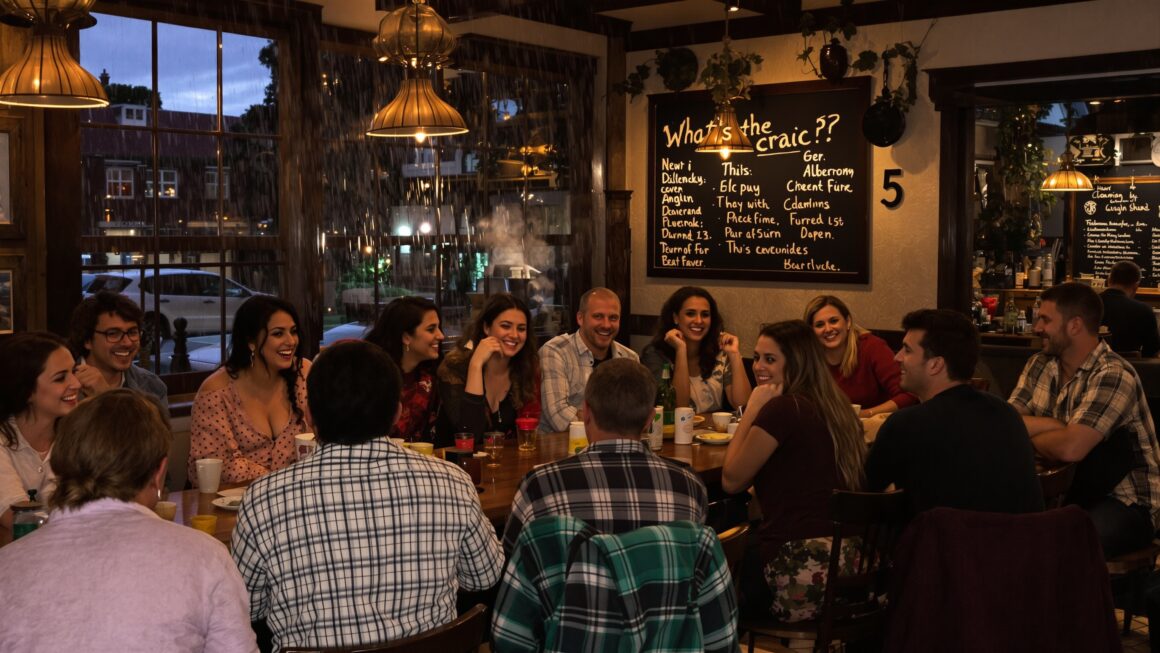
4. The “craic” is more than entertainment
Pronounced “crack,” craic means fun, atmosphere, gossip and good times all rolled into one. Asking “What’s the craic?” is asking how things are going.
How to respond: Offer a nugget of news or a joke — craic thrives on stories.
5. They use deceptively odd expressions
“You’ll be after…”, “on the messages” (shopping), “yoke” (thing), “deadly” (brilliant) — Hiberno-English has colourful turns of phrase that can baffle first-timers.
How to respond: Ask for clarification — locals enjoy explaining and showing off their language.
6. Storytelling is long and winding (and essential)
Conversations often include sideways anecdotes, digressions and jokes. The point sometimes comes at the end — or doesn’t, and that’s part of the fun.
How to respond: Lean in. These tangents are how people connect.
7. They’ll say “sorry” a lot
“I’m sorry” is used for small social smoothing — stepping around someone, minor mistakes, etc. It’s a courtesy more than an admission of guilt.
How to respond: Don’t read legal admissions into it. A smile or “no bother” is fine.
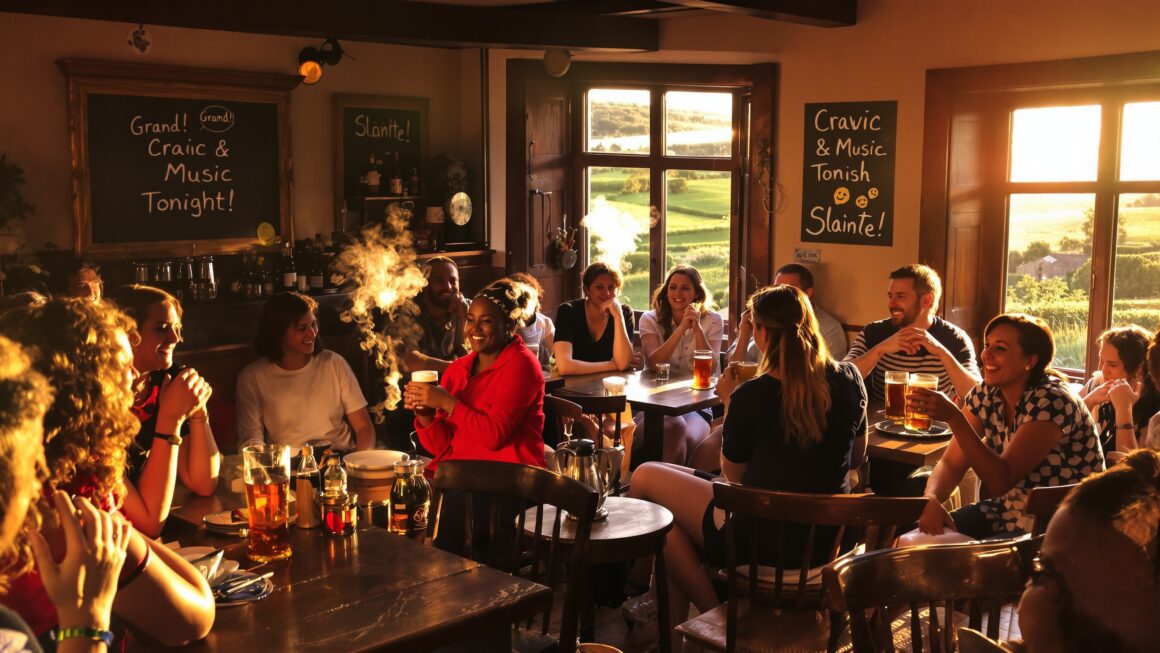
8. Pubs are community centres — and a tiny bit chaotic
Pubs aren’t just bars; they’re where music, politics, weddings, and funerals can be discussed. Expect impromptu singing, strong opinions and the occasional organiser shouting across a room.
How to respond: Join a song if you can, keep an open mind, and tip your server.
9. They celebrate small kindnesses loudly
A favour is often repaid with a story, a pint, or a public acknowledgment. Reciprocity is social currency.
How to respond: Gratitude goes a long way. Offer to return the gesture when you can.
10. Sarcasm and understatements are front-row comedy
Irish humour often relies on understatement and self-deprecation. “Not bad” can mean “phenomenal.”
How to respond: Don’t take everything literally; read the tone.
11. They’ll use religion, history and sport in casual chat
References to saints’ days, county rivalries, or the GAA (Gaelic Athletic Association) may appear in ordinary conversation. These are identity markers, not always strictly religious or political.
How to respond: Ask questions — people are proud to explain their teams and traditions.
12. They find everything an excuse for a party
Whether it’s a new job, a new fence, a funeral or a Tuesday, an Irish gathering can turn into a celebration. Life is lived around shared moments.
How to respond: Bring good cheer and an appetite for storytelling.
13. They’re fiercely hospitable and oddly formal about some things
You may be invited to someone’s house and asked to remove your shoes, sit in a certain chair, or be offered the good china. There’s ceremony in the small things.
How to respond: Respect the ritual — it’s a sign of care.
Tips for visitors:
– Learn a few local phrases (sláinte! craic?) — it opens doors.
– Ask rather than assume if you don’t understand.
– Smile, laugh at the jokes, and bring a small gift if visiting a home.
– Remember context: Ireland is diverse; rural and urban experiences differ.
Why these “weird” things matter
What outsiders call quirks are mostly ways of maintaining connection in a small, history-rich place. The emphasis on conversation, understatement, shared humour and hospitality helps people navigate life together. Once you stop treating them as oddities and start joining in, they become some of the nicest parts of being in Ireland.
Would you like a one-minute cheat-sheet of common Irish phrases and what they really mean?