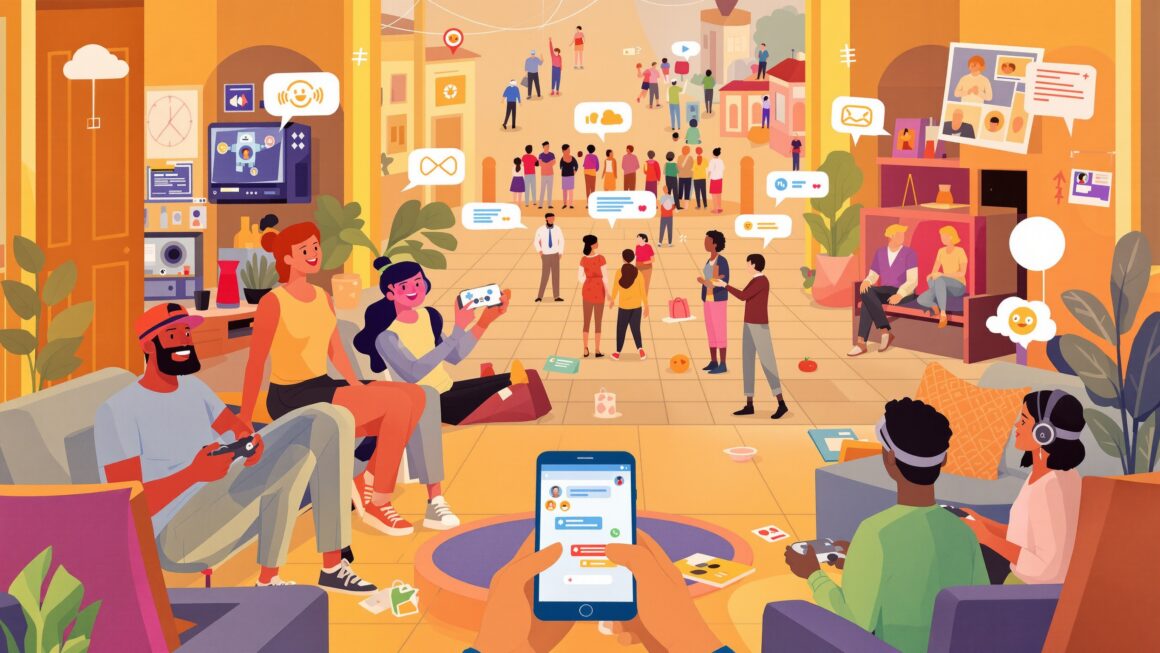
Social gaming: the unexpected superpower of modern friendship
Social gaming has quietly transformed the way people meet, play, and stay connected. What started as a few players sharing a pixelated screen has become an ecosystem where friendships are forged, communities rally around common interests, and entire careers are built. If you think gaming is just about high scores and solo grind, think again. Here’s why social gaming matters, how it works, and how you can get the most out of it — safely and with more fun.
What is social gaming?
Social gaming refers to any gaming experience that brings people together to interact, cooperate, or compete. That interaction can happen in the same room, across the world, or inside a virtual universe. Social features include voice and text chat, friend lists, parties, guilds and clans, shared objectives, and even persistent social spaces where players hang out.
Examples range from console couch co-op and mobile party apps to massive online worlds and streaming communities.
A short history
- Early arcade cabinets and split-screen consoles created the first causal social moments.
- Online matchmaking and MMOs in the late 90s and 2000s scaled social play globally.
- Mobile gaming and social platforms brought casual players into the fold.
- Streaming, esports, and shared virtual spaces turned social gaming into a culture and an industry.
Types of social gaming experiences
- Cooperative games: Players team up to solve problems or beat levels.
- Competitive multiplayer: Ranked matches and casual brawls that spark rivalry and camaraderie.
- Casual and party games: Low-barrier titles that are great for social gatherings.
- Massive multiplayer online worlds: Persistent universes with deep social systems.
- Social casino and casual mobile ecosystems: Quick social interactions around simple mechanics.
- Shared creative spaces: Games that let players build, trade, and show off creations.
Why social gaming matters
- Connection: It reduces loneliness by creating shared experiences and rituals.
- Skill-building: Communication, teamwork, leadership, and strategic thinking flourish in multiplayer settings.
- Community and identity: Players find tribes, take on roles, and form long-term relationships.
- Entertainment economy: Social features drive content creation, streaming, and word-of-mouth growth.
Social gaming is often less about the game itself and more about the social layers wrapped around it.
The flip side: risks and challenges
- Toxicity: Harassment and negative behavior can push players away. Moderation and community moderation tools are critical.
- Privacy: Voice chat and shared profiles can leak personal information if players are careless.
- Monetization pressure: Social systems can amplify pressure to spend on cosmetics or passes to keep up with friends.
- Time management: Social obligations in games can make it harder to step away.
Design principles that make social gaming great
For developers and community leaders:
– Reduce friction: Easy invites, seamless party systems, and cross-play help people connect.
– Promote positive behavior: Reward cooperation and highlight role models.
– Give people places to belong: Guilds, clubs, and player-run events deepen investment.
– Provide safety tools: Robust reporting, moderation layers, and parental controls preserve healthy spaces.
– Design for inclusivity: Accessible controls and clear UX draw a broader audience.
How to get started (for players)
- Pick the right game: Look for titles with robust social features and communities that match your vibe.
- Start small: Join casual matches, friends lists, or community servers before committing to competitive scenes.
- Use voice or text wisely: Voice chat builds faster bonds, but use mute and block features if you need space.
- Join groups: Discord servers, in-game guilds, and meetup events are easy ways to find regular teammates.
- Set healthy boundaries: Decide how much time and money you want to spend, and stick to it.
How streaming and content amplify social play
Streaming platforms turn gameplay into shared events. Viewers become participants, chat becomes part of the experience, and creators build communities that outlive any single game. This loop — game to stream to community — amplifies social play and gives players new ways to interact.
The future: where social gaming is headed
- Cross-play and cloud gaming will make platform differences less relevant, uniting friends on different devices.
- AR and VR will deepen presence, letting players share more lifelike experiences.
- Smarter AI companions and NPCs will fill social gaps, offering cooperative partners and dynamic social roles.
- Decentralized and player-driven economies may give communities more control over content and governance.
Practical tips for parents and community leaders
- Talk about online behavior: What’s acceptable and what’s not.
- Learn the platforms: Know how to use reporting tools and privacy settings.
- Encourage balance: Reward real-world activities and set screen-time norms.
- Foster healthy communities: Welcome new players, set clear rules, and enforce them consistently.
Final thoughts
Social gaming is more than a pastime. It is an engine of modern social life that shapes how people connect, learn, and express themselves. Whether you want to make new friends, lead a guild, stream your progress, or simply enjoy a weekly game night, social gaming offers a powerful, evolving set of tools. Approach it with curiosity, good boundaries, and respect for others, and you might find that the greatest wins are the people you meet along the way.
Got a favorite social game or a memorable gaming friendship story? Share it with someone — and see how fast a single invite can turn into a community.