The games that shaped a Canadian childhood
There are games that travel the world, and there are games that feel like home. In Canada, childhood play has been shaped by seasons, community spaces and the rich traditions of Indigenous peoples. Whether you grew up on a city street, a prairie, or beside a frozen pond, these games were how we learned to laugh, compete, share and stay warm in winter.
Below are 12 of the best childhood games Canadians have loved — short rules, why they mattered, and simple ideas to adapt them for today.
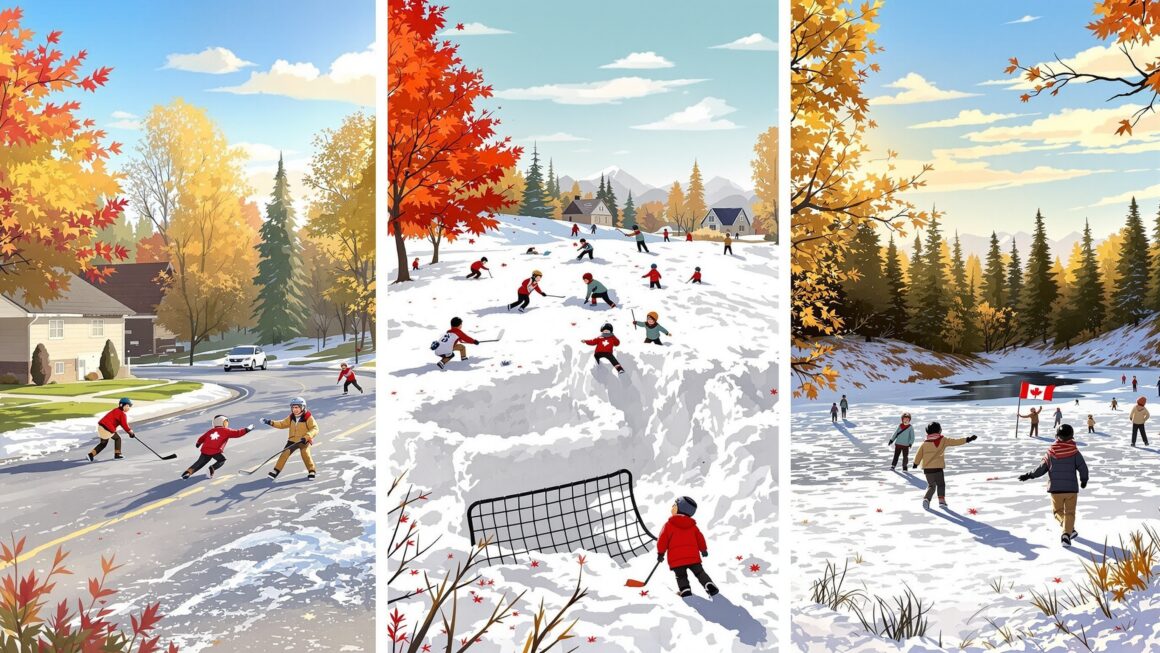
1) Shinny (pick-up hockey)
- What it is: Informal street or pond hockey with improvised teams and simple rules. Often barefoot players plan their shifts and positions on the fly.
- Why kids loved it: Fast, social, and creative. Everyone could join with a stick, a ball or puck, and a few makeshift goals.
- Modern tips: Use soft pucks for street play and helmets for kids on ice. Smaller nets and timed shifts keep play fair and safe.
2) Tobogganing and snow forts
- What it is: Racing down hills on sleds and building snow shelters for hide-and-seek, forts or bases.
- Why kids loved it: Combines speed, teamwork and invention. Snow is a free, plentiful toy that naturally fosters creativity.
- Modern tips: Choose gentle hills, wear helmets and warm layers, and never sled near roads or trees.
3) Capture the Flag
- What it is: Two teams, two territories, one flag each. Steal the other team’s flag and bring it back without being tagged.
- Why kids loved it: Strategy, stealth and teamwork. Great for large groups and longer play sessions.
- Modern tips: Use cones to mark boundaries and a time limit to keep games moving. Designate safe zones to prevent overly rough play.
4) Kick the Can
- What it is: A mix of hide-and-seek and tag where captured players can be freed if they touch a can before someone guards it.
- Why kids loved it: High suspense, sneaky rescues and a satisfying risk/reward balance.
- Modern tips: Use a brightly colored object instead of a rusty can. Keep play in a safe, traffic-free area.
5) Four Square
- What it is: A handball game on a square court divided into four smaller squares. Players bounce a ball between squares and try to knock others out.
- Why kids loved it: Simple setup, great for schoolyards and short breaks. Encourages quick reflexes and friendly rivalry.
- Modern tips: Chalk lines and a rubber playground ball are all you need. Vary the bounce rules for beginners.
6) Hide and Seek
- What it is: One seeker counts while others hide, then hunts them down.
- Why kids loved it: Excitement of hiding, the thrill of being sneaky, and the social joy of cooperative hiding spots.
- Modern tips: Set clear boundaries and rules about off-limits areas like basements, garages or private property.
7) Marbles and Jacks
- What it is: Classic small-object games played on sidewalks, stoops or gym floors using skill and flicking precision.
- Why kids loved it: Portable, economical and great for quiet, competitive afternoons.
- Modern tips: Use soft-surface mats for indoor play and keep a small container for pieces so they don’t get lost.
8) Lacrosse and its Indigenous roots
- What it is: Team sport with a netted stick used to catch, carry and throw a ball. Lacrosse has deep history among many First Nations and was traditionally more than a game.
- Why kids loved it: High-energy teamwork with a cultural legacy that connects sport to storytelling and community.
- Modern tips: Learn about local Indigenous history and play respectfully. Use age-appropriate gear and introductory drills for new players.
9) Inuit games: High Kick and Team Games
- What it is: Athletic competitions like the one-foot high kick, blanket toss and strength/endurance games practiced for generations in Inuit communities.
- Why kids loved it: Tests of balance, agility and community spirit. These games also teach cultural values and resilience.
- Modern tips: If trying any traditional games, learn from Indigenous instructors and respect cultural context.
10) Snowball fights (rules-based)
- What it is: Organized or spontaneous throwing of snowballs with built-in rules to keep it fun and safe.
- Why kids loved it: Immediate, joyful physical play with no equipment required.
- Modern tips: Establish safety rules: no ice-packed balls, no aiming at faces, and time limits. Use soft, unpacked snow and create agreed boundaries.
11) Ringette and street variations
- What it is: A fast, team stick sport originally developed for girls and now played widely on ice rinks and as street variants.
- Why kids loved it: Team structure and rules that encourage passing, positioning and cooperation.
- Modern tips: Street ringette with a soft ball and cones is a great way to introduce fundamentals to younger kids.
12) Backyard games and inventiveness (sack races, obstacle courses, relay races)
- What it is: Short, customizable activities that require minimal equipment and lots of imagination.
- Why kids loved it: Low pressure, highly social and endlessly adaptable to any space or number of players.
- Modern tips: Use recycled materials, build safe obstacles and include everyone by designing mixed-ability roles.
Why these games matter
These games taught more than athletic skill. They built conflict resolution, leadership, creativity and neighborhood bonds. They bridge generations: parents recall shinny on the pond, kids create new hybrid games on tablets and pavement. Preserving some of these traditions helps communities stay connected across seasons and cultures.
Tips for parents and organizers
- Prioritize safety: helmets, boundaries, and simple ground rules keep play fun.
- Respect tradition: when trying Indigenous games, learn from community members to avoid appropriation and ensure authenticity.
- Adapt for space and age: scale rules for younger kids and limited yards. Use soft equipment and shorter game times.
- Encourage inclusivity: tweak rules so everyone can participate and contribute meaningfully.
Play is how we pass stories, memories and culture forward. Whether it was your first goal in shinny, the secret of a perfect snow fort, or the rush of a successful Capture the Flag raid, these games are stitched into the Canadian childhood experience. Try one with the next generation and notice how quickly a group of kids becomes a community.
Want a printable one-page rules sheet for any of these games or a kid-friendly variations list for small spaces? Tell me which game and the ages involved and I will make one.